
When Survival Isn’t Enough: The Long Work of Integration in Marriage

Updated: Apr 19

The Long Work of Love — Essay #1
Reflections on marriage, survival, and the slow courage of becoming real together.
The Years of Survival
Long partnerships are often measured by endurance. If two people stay together long enough, the assumption is that love has simply held steady through the years. But endurance and integration are not the same thing.
Many couples survive hardship together. Fewer learn how to grow through it. And sometimes the greatest turning point in a relationship doesn’t come during tragedy, but years later—when survival is no longer enough.
This essay is about that moment. The moment when a long partnership reaches the place where two people must decide whether they will continue surviving together or begin the riskier work of becoming fully alive again.
My ask threatened his survival. His refusal threatened mine.
At the time, I didn’t have language for it. I only knew that something inside me had surfaced that I could no longer push aside.
For years—really decades—Jerry and I had been surviving together.
We got married young, while we were still in college. Within a short time we stepped into the demanding world of medical training, where life accelerates quickly and responsibility arrives faster than most people expect.

Not long after, we experienced the grief of losing a baby in early pregnancy.
Then we became pregnant with Madalyne, our first-born. Joy and sorrow arrived braided together in ways we didn’t yet know how to hold.
By that time, we had already moved away from our families to a place where we knew no one. It was religiously affiliated and felt like the best option we had, but it meant leaving behind the relational safety net we had always known.
And sandwiched between the loss of our first pregnancy and the birth of our first-born, my younger brother Michael suffered a traumatic brain injury.
Some people say that losing someone this way can be harder than death. The person you love is still here, but the life you shared with them is forever changed. Acceptance becomes something you revisit again and again. Michael was only 20 years old. It would be a very long road.
My family of origin had always been deeply connected. We were, in many ways, dysfunctional—but we were joyful and tightly woven together. We spent time together constantly. We relied on each other emotionally and relationally.
Jerry stepped into that warmth easily. But after Michael’s accident, that structure changed forever.
Suddenly Jerry and I were newly married, new parents, and largely alone while navigating medicine, grief, and the relentless demands of life. We had two babies within fourteen months of each other—two small miracles that filled our days with purpose in the middle of heartache.
Our entire world revolved around survival.
Keeping our two precious babies alive.
Managing the demands of medical school and work.
Navigating grief that had no clear resolution.
I worked as an RN case manager. Jerry was in his third year of medical school. Every month I traveled to Denver to see Michael and my family because I simply couldn’t not go. That connection was part of my lifeline. Even though the connection now meant exhaustion that I could never have imagined. Not merely the exhaustion of new motherhood, but the added traveling with an infant and then and infant and a toddler, the back of forth from place to place.
The constant financial strain…
Life moved at a relentless pace. Looking back now, I sometimes say it took ten years before we could come up for air. But the truth is, it was closer to twenty.
Those were the survival years. During that time, Jerry and I became a team.
Not in the romantic movie sense. More like two climbers sharing the same rope on a steep mountain face. When one slips, the other anchors. When one is exhausted, the other holds steady long enough for both to rest.
We tagged each other in when we needed to. We leaned in when the other couldn’t. We kept moving. For a long time, that was enough.
Until the day it wasn’t.
When the System Breaks in a Marriage
Somewhere around year twenty-two, I woke up and realized something inside me had changed.
I needed more. Not more responsibility. Not more activity. Not more survival. I needed more of us.
More connection.
More presence.
More honesty.
When I finally said that out loud, it didn’t land the way I expected. It landed like a threat.
Jerry’s response was immediate and intense. There was anger there, and a sharpness that honestly frightened me a little. Looking back now, I understand it differently. My request disrupted the system that had been holding us together for decades. Survival had been the structure.
And suddenly I was asking us to change it.
But what I was really asking for was this: I wanted him to fight with me. Not to attack or defend, but to feel deeply enough to meet me there.
For years Jerry had been the steady one. When the grief over Michael overwhelmed me, he would wake from a dead sleep and hold me while I cried. Even when he had nothing left to give, he gave comfort. He carried us in that way for a long time. But now I was asking for something different. I was asking him to stop giving from whatever place had helped us survive and begin giving from something more real.
From the authentic place where he wouldn’t always be calm or perfect or endlessly good.
But honest. True. Alive.
My ask threatened his survival.
And his refusal threatened mine.
That moment became the turning point in our marriage.
Not because everything suddenly improved, but because something honest had finally surfaced.
Up until then we had been incredibly good at enduring together. But endurance is not the same thing as integration.
Integration requires something riskier. It requires two people to find their way back to themselves before they can find their way forward together. That process wasn’t immediate.
It required boundaries—internally and externally—for both of us. We each had to rediscover parts of ourselves that had been set aside during the long years of survival. Only then could we begin building something new.
Learning to Drop the Rope
One of the ways we learned to do that was by learning when to drop the rope.
There are moments when every cell in me wants to finish the conversation—to solve the problem, to be understood, to get the apology, to make sure the meaning lands exactly where I want it to land.
But sometimes growth doesn’t come from pushing harder.
Sometimes it comes from standing up straight, taking a breath, and stepping back.
Dropping the rope.
After that, life usually moves forward in ordinary ways. We go to work. We run errands. We putter around the house. We play with the dogs. Nothing about those moments feels profound at the time. But slowly something shifts.
We come back to the conversation fresher, with more resilience and perspective. When that happens, I find that I believe him more. And he believes me more.
That belief in each other didn’t happen all at once. It happened one conversation at a time. One pause at a time. One rest at a time.
Over the years we’ve begun to recognize something deeper than simple care for each other.
We’ve begun to trust the goodness the other holds. Not just kindness, but perspective. The other person sees something we cannot see on our own. And when we allow space for that difference instead of trying to win, the relationship becomes stronger for it.
There were touch points with hope all along the way. It wasn’t as if our life was only hardship.
In the ways of the world, we have experienced a great deal of goodness. Our careers unfolded in ways we could not have predicted. We built a stable home. Our children grew. We learned how to do our work well.
By most external measures, we have been fortunate. Whether that is luck or providence, I’m not sure. And at this point, I don’t feel the need to prove the difference.
What I know is that both grief and goodness have been present in our story from the beginning.
Looking back now, I sometimes think the fact that we are still here together is a kind of miracle because life gave us so many opportunities to fracture.
Grief.
Responsibility.
Isolation.
Exhaustion
The slow grind of medicine and parenthood. Any one of those things can break a couple apart. We had all of them layered together.
And yet something steady was happening underneath it all.
The miracle isn’t just that we didn’t break apart.
The miracle is that we grew closer through the very things that could have separated us.
The miracle is that we became different people and somehow learned how to stay together anyway.
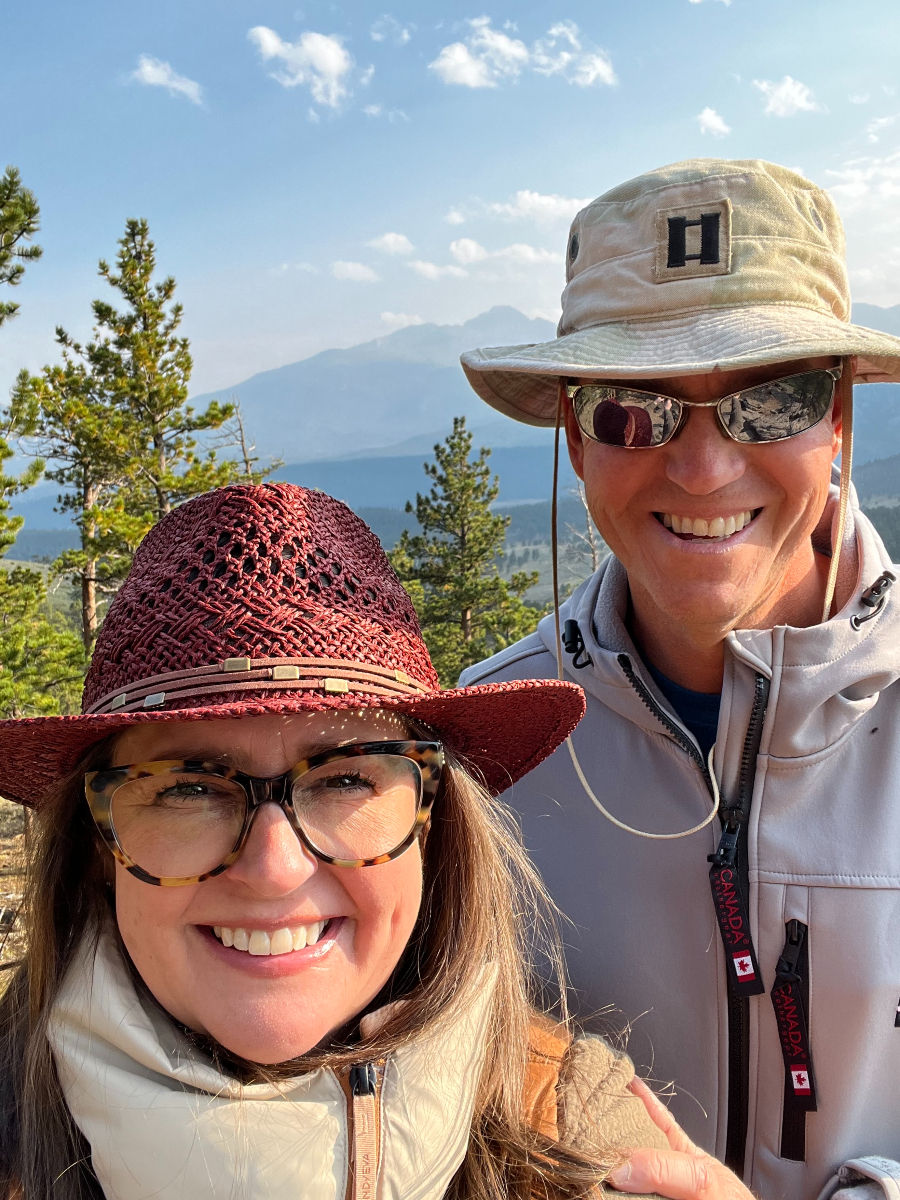
Integration in a relationship doesn’t happen through grand gestures. It happens through thousands of quiet choices to keep turning toward each other while life is doing its best to pull you apart.
Sometimes it takes decades just to breathe again. But when two people keep doing that work, something unexpected begins to take shape on the other side. It’s a steadiness, a foundation that was once new but is now tempered and tested. A partnership that has been forged by fire.
What once threatened our survival became the beginning of something stronger than survival.
When I look at our life now, I can say several things at once. We are closer than we have ever been.
We are also different people than the ones who began this marriage. And what we’ve built together is steadier than what we started with. But the truth is, I’m still discovering what all of that means. Integration isn’t something we achieved and then checked off the list.
It’s something we continue to practice—one conversation, one pause, one ordinary day at a time.


We practice many things in life, to get better at that particular skill. I practiced the piano. You practiced a song to make it fit your own sweet voice. We are told to practice meditation, thankfulness, patience, faith. Professions like law, dentistry, and medicine are called "practices." Thank you for this unique invitation to practice marriage: simple, yet profound. More than that, thank you for that disruptive request, those years ago, that became a turning point for us.